


Data Analytics & AI for Financial Services Summit | Day 1:
7:45 am
REGISTRATION & NETWORKING BREAKFAST: BUILD COMMUNITY CONTACTS
- Start your day off right and connect with data and analytics leaders in financial services.
- Get to know your industry peers and colleagues over a delicious breakfast.
- Source practical tips, discuss best practices, and prepare for the day ahead.

8:45 am
OPENING COMMENTS FROM YOUR HOST
Gain insight into today’s sessions so you can get the most out of your conference experience.
9:00 am
OPENING KEYNOTE / CASE STUDY: FROM PILOT PURGATORY TO PRODUCTION
Engineering the Data and AI Foundation for the Intelligent Financial Institution
The next challenge for financial services is not deploying another AI use case — it is building the enterprise architecture that allows AI, agents, and real-time decisioning to operate securely across the business. Explore how leading institutions can connect trusted data, reusable intelligence, and production-grade AI to transform customer, risk, and operational decisions. Walk away with a roadmap to:
- Build reusable data products and governed context layers that give AI and agents trusted access to customer, transaction, risk, and operational data.
- Engineer real-time, production-ready AI architecture by connecting modern data platforms, APIs, lineage, governance, observability, and human oversight.
- Scale intelligent decisioning across customer engagement, fraud and financial crime, underwriting, research, and operations — with clear controls and measurable value built in from day one.
Accelerate growth, productivity, and risk reduction by turning fragmented AI experiments into an enterprise intelligence layer built for financial services.
9:30 am
SPEED NETWORKING: MAKE MEANINGFUL CONNECTIONS
Grow your network by meeting like-minded individuals to share your latest ideas and projects with:
- Enjoy a quick icebreaker, exchange LinkedIn information, and build lasting business relationships.
- Achieve your conference networking goals in a fun and agile fashion.
- Join a community of data leaders in financial services and gain invaluable support.

10:00 am
INDUSTRY EXPERT CONTENT: THE ECONOMICS OF ENTERPRISE AI
How to Control the Cost of AI Without Slowing Innovation
As financial institutions move from experimentation to widespread AI adoption, a new challenge is emerging: the economics of running AI at enterprise scale. Models, agents, GPUs, cloud consumption, and growing data workloads can rapidly increase technology costs without necessarily increasing business value. Discover how to engineer AI for both performance and economics. Source practical tips to:
- Match the right model, infrastructure, and deployment approach to the right financial services workload — rather than defaulting to the largest model or most expensive compute.
- Apply AI FinOps, workload optimization, and hybrid infrastructure strategies to control inference, compute, and data costs as AI usage scales.
- Measure the unit economics of AI across use cases to determine what to scale, optimize, redesign, or retire based on measurable business value.
Increase AI ROI by engineering cost, performance, and business value into every AI workload from day one.
10:30 am
EXECUTIVE PANEL: FROM COPILOTS TO COLLEAGUES
How to Engineer Financial Services for the Agentic Enterprise
The next wave of AI will not simply answer questions — it will initiate actions, coordinate tasks, and execute increasingly complex financial services workflows. As institutions move from copilots to autonomous and multi-agent systems, discover how to redesign processes, technology, and human roles around a new generation of digital workers. Develop a blueprint to:
- Orchestrate AI agents across complex, multi-step workflows — from customer servicing and operations to fraud investigation, research, and financial decisioning.
- Engineer seamless agent-to-agent and human-to-agent handoffs, connecting AI securely with enterprise applications, APIs, and core financial systems.
- Redesign workflows around intelligent execution, determining where agents should assist, act autonomously, escalate to humans, or coordinate with other agents.
Unlock productivity, speed, and entirely new operating models by moving from AI that assists your workforce to intelligent agents that execute alongside it.


11:00 am
REFRESHMENTS BREAK & EXHIBITOR LOUNGE: VISIT BOOTHS & SOURCE EXPERTISE
- Explore the latest data analytics technology and strategies catered to financial services with our industry-leading sponsors.
- Share your challenges with the biggest innovators in the business.
- Schedule one-to-one private meetings for personalized advice.
11:30 am
INDUSTRY EXPERT: GOVERNANCE AT MACHINE SPEED
How to Build Adaptive Data Controls for the AI Era
Traditional governance was designed for relatively predictable data pipelines, users, and applications. AI changes that equation: Data is being discovered, combined, and consumed dynamically by models, agents, and automated workflows. Financial institutions need controls that can operate at the same speed. Discover how to:
- Shift from static policies and manual approvals toward machine-readable policies, automated controls, and continuous enforcement across data and AI environments.
- Activate metadata, classification, and policy intelligence to dynamically determine who — or what — can access data, for which purpose and under what conditions.
- Embed adaptive controls directly into data products, AI workflows, and enterprise platforms, so governance follows information wherever and however it is used.
Accelerate innovation and reduce regulatory risk by transforming governance from a manual checkpoint into an intelligent, always-on control layer.
12:00 pm
PANEL: THE DATA OPERATING MODEL IS BROKEN
How to Redesign the Data Function for the AI-Native Financial Institution
The traditional data organization is being pulled apart. Data engineering, AI, analytics, governance, and business teams increasingly share responsibility for the same products and outcomes — while financial institutions still need clear accountability and enterprise control. Explore how to redesign the data function around value, products, and execution rather than organizational silos. Walk away with a roadmap to:
- Reengineer the central data function — deciding which capabilities should be centralized, embedded in business domains, delivered as shared platforms, or combined with AI teams.
- Establish product-based ownership that connects data engineers, governance, analytics, AI, and business leaders around persistent financial services products and measurable outcomes.
- Create new accountability and funding models that give domains greater execution power while preserving enterprise standards, interoperability, and regulatory control.
Accelerate innovation and business value by replacing fragmented data silos with an operating model built for products, AI, and enterprise-wide execution.

12:30 pm
NETWORKING LUNCH: DELVE INTO INDUSTRY CONVERSATIONS
- Meet interesting speakers and pick their brains on the latest data analytics issues.
- Expand your network and make connections that last beyond the conference.
- Enjoy great food and service while engaging with your financial services colleagues in data.

12:45 pm
Banking on Trusted Data: Powering Agentic AI, Personalization, and Security
As banks move beyond GenAI experiments toward autonomous, agent-driven use cases, one challenge keeps showing up: trust. AI agents cannot personalize experiences, detect fraud, or act autonomously if data is stale, fragmented, or poorly governed. Build a trusted data foundation for Agentic AI by:
- Delivering live, real-time data access across core banking, ERP, and fintech systems, without replication
- Establishing a shared semantic layer so humans and AI agents reason from the same business context
- Embedding governance and security by design, allowing AI to act safely within business and regulatory guardrails
- Turning trusted data into outcomes, including faster insights, reduced fraud risk, and quicker rollout of AI initiatives
Attend this session to see how banks are moving from AI ambition to trusted, production-ready Agentic AI, and why the data layer is now the deciding factor.

1:30 pm
EXBIHITOR LOUNGE VISITS: VISIT BOOTHS & WIN PRIZES
- Browse through different sponsor booths and test drive new technology.
- Enter your name for a chance to win exciting prizes.
- Take advantage of event-specific offers and special content.

1:45 pm
PANEL: BUILD, BUY, OR PARTNER?
How to Architect the Financial Institution’s AI Ecosystem
The AI technology stack is becoming more fragmented just as financial institutions become more dependent on it. Foundation models, specialist models, agents, hyperscalers, fintechs, and proprietary capabilities will increasingly coexist — and today’s technology choice could become tomorrow’s constraint. Explore how to build an AI ecosystem that preserves strategic advantage and flexibility. Adopt best practices to:
- Determine where proprietary advantage genuinely matters — and what models, agents, data products, and AI capabilities should be built internally, bought, or delivered through strategic partners.
- Architect for optionality through modular platforms, model choice, and interoperable capabilities that allow institutions to switch, combine, and evolve providers without rebuilding the AI stack.
- Redesign technology partnerships around shared innovation, IP ownership, portability, resilience, and measurable value rather than traditional vendor relationships.
Accelerate innovation and protect strategic advantage by building an AI ecosystem that can evolve as quickly as the technology itself.

1:45 pm
PANEL: CUTTING THROUGH THE NOISE
How to Engineer the AI-Native Financial Services Data Stack
The financial services data stack is evolving from pipelines and repositories into an intelligent architecture capable of supplying applications, models, and decisions with context in real time. Explore how the individual layers fit together — and how to engineer them without creating another generation of technical complexity. Walk away with a roadmap to:
- Connect transactional systems, lakehouse, and warehouse environments, streaming, data products, APIs, vector stores, and semantic layers into a coherent AI-ready architecture.
- Engineer data flows across batch, streaming, and AI workloads to deliver fresh, contextual information wherever models, applications, and decisions consume it.
- Eliminate redundant pipelines, unnecessary data movement, and overlapping technology layers through simpler integration patterns and reusable architectural components.
Accelerate real-time intelligence and AI delivery by engineering a simpler, faster, and more connected financial services data architecture.


2:15 pm
CASE STUDY: BEYOND THE CHATBOT
How to Build an AI Assistant That Financial Professionals Actually Use
The next generation of financial services AI assistants must do more than answer questions. To become genuinely useful to advisors and employees, they need to understand enterprise knowledge, retrieve the right client and business context, integrate into existing workflows, and deliver answers people can confidently act upon. Drawing on the wealth management environment, explore how to:
- Design around high-value advisor and employee workflows — identifying where conversational AI can reduce search, synthesis, and administrative work while improving the client experience.
- Engineer an intelligent knowledge layer using RAG, enterprise search, permissions, and contextual retrieval to deliver relevant answers from complex financial information.
- Embed AI assistants into everyday tools and workflows, combining continuous evaluation, feedback loops, and usage analytics to improve accuracy, adoption, and measurable value over time.
Increase advisor productivity and client value by turning conversational AI from a standalone chatbot into an intelligent assistant embedded in everyday work.

2:15 pm
CASE STUDY: FROM PIPELINES TO PRODUCTS
How to Engineer Reusable Data Products for Financial Services
Financial institutions have spent years building pipelines that move data between systems. The next challenge is turning that data into persistent, reusable products that can serve analytics, applications, real-time decisions, and AI without rebuilding the same logic for every use case. Explore the engineering patterns required to:
- Build production-grade data products with standardized contracts, APIs, metadata, and quality expectations that make financial data easier to discover, understand, and consume.
- Engineer once and serve many — delivering the same trusted customer, transaction, risk, or operational data across analytics, applications, streaming, and AI workloads.
- Operationalize data products through automated testing, observability, versioning, and lifecycle management so teams can consume them with the reliability expected from software products.
Accelerate analytics and AI delivery while reducing duplicated engineering by transforming financial data into reusable, production-grade enterprise products.
2:45 pm
CASE STUDY: BEYOND THE DATA TEAM
How to Run Data and AI as a Business Value Portfolio
Data leaders are increasingly being asked to demonstrate not how many models, dashboards, or data products they deliver — but what measurable value those investments create. Explore how to connect the data and AI portfolio directly to financial services priorities and make harder decisions about where resources should be deployed. Develop a strategy to:
- Translate data and AI initiatives into measurable outcomes across revenue growth, customer value, fraud losses, risk, productivity, and operational efficiency.
- Build value frameworks that connect investment, adoption, and business impact —creating visibility into which initiatives are delivering, which need intervention, and which should be stopped.
- Reallocate talent and investment dynamically toward the highest-value opportunities rather than allowing legacy projects and technology activity to dictate the portfolio.
Increase the return on data and AI investment by managing every initiative against the business value it creates.

2:45 pm
CASE STUDY: BEYOND THE DASHBOARD
How to Engineer the Next Generation of Business Intelligence
Dashboards are no longer the final interface between employees and enterprise data. Semantic layers, natural-language querying, embedded analytics, and AI-generated insights are changing how intelligence is delivered and consumed. Explore how to modernize BI without creating another fragmented layer of analytics technology. Walk away with a roadmap to:
- Build a trusted semantic layer that gives employees and AI tools a consistent understanding of financial metrics, customers, products, and business performance.
- Combine conversational analytics, embedded BI, and AI-generated insights to deliver intelligence directly within the applications and workflows where decisions happen.
- Engineer a modern BI environment that reduces dashboard sprawl, increases self-service, and measures success through adoption, decision speed, and business impact.
Increase productivity and decision speed by transforming BI from a collection of dashboards into an intelligent, contextual interface to enterprise data.

3:00 pm
INDUSTRY EXPERT: THE NEW LINEAGE CHALLENGE
How to Build End-to-End Traceability for AI Decisions and Actions
Traditional lineage can tell you where data came from. AI requires financial institutions to reconstruct an entire decision chain — what data was retrieved, which model was used, what context it received, how an agent reasoned through a workflow, and what action ultimately followed. Discover how to:
- Extend lineage across data, models, prompts, retrieved context, agents, tools, outputs, and downstream actions to create an end-to-end record of AI execution.
- Capture the evidence behind AI-generated decisions through model provenance, versioning, observability, and immutable audit trails that allow teams to reconstruct what happened and why.
- Operationalize AI traceability across complex production environments so risk, compliance, and technology teams can investigate decisions without introducing manual bottlenecks.
Reduce regulatory and operational risk by making every material AI decision and action traceable, reproducible, and auditable.
3:30 pm
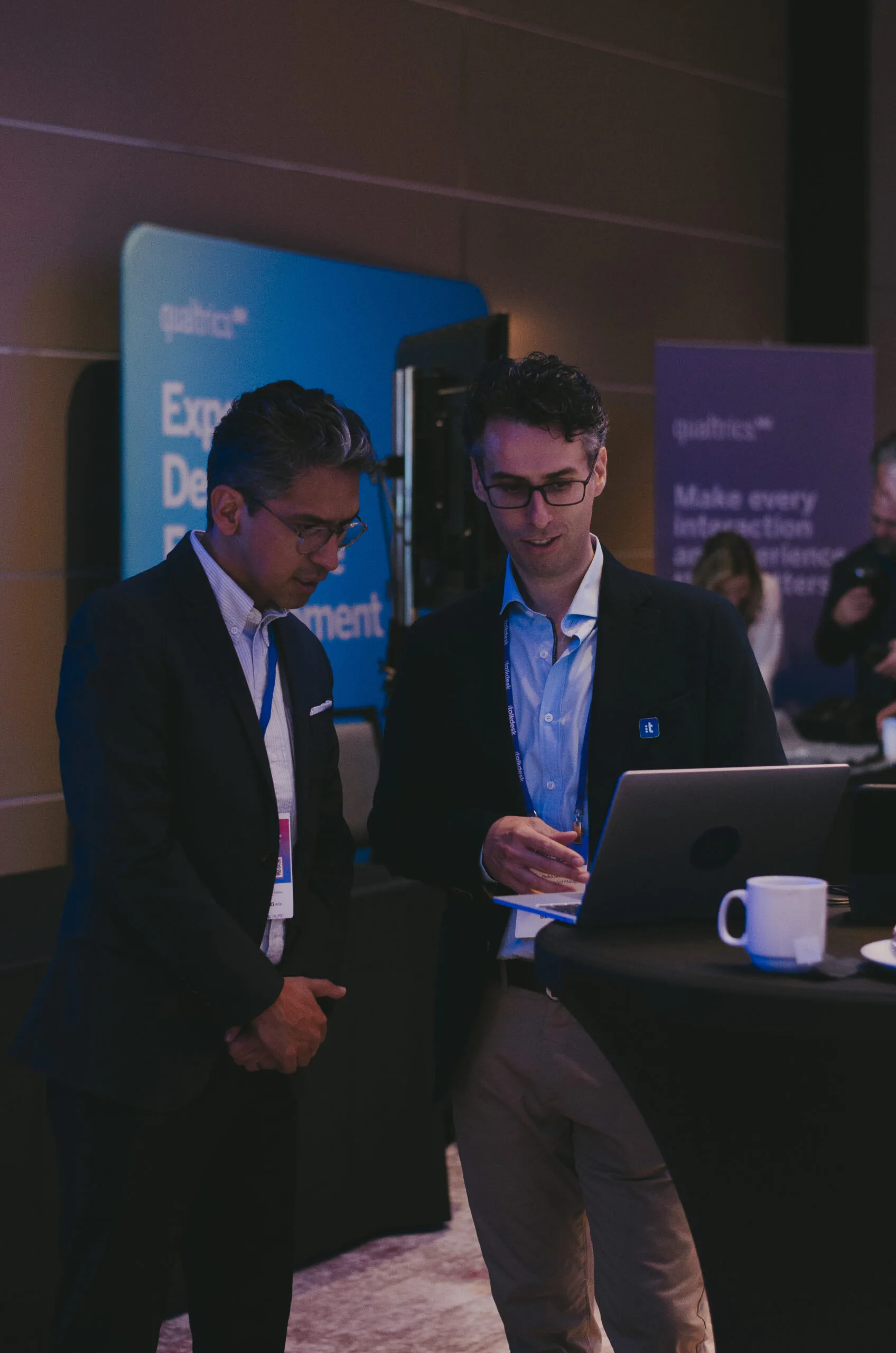
REFRESHMENTS BREAK & EXHIBITOR LOUNGE: ATTEND VENDOR DEMOS & CONSULT INDUSTRY EXPERTS
- Enjoy exclusive sponsor demos and experience the next level of data analytics for financial services innovation firsthand.
- Meet one-on-one with leading solution providers to discuss organizational hurdles.
- Brainstorm solutions and gain new perspectives and ideas.
4:00 pm
CASE STUDY: PREDICTION ISN’T THE DECISION
How to Turn Advanced Analytics into Better Financial Decisions
Financial institutions have spent years building predictive models, but an accurate prediction does not automatically produce a better business decision. The next opportunity is to combine predictive analytics, optimization, and decision science to determine what action should follow. Take away practical strategies to:
- Combine predictive models with business rules, optimization, and decision science to improve pricing, credit, retention, portfolio, and risk decisions.
- Move beyond model accuracy by measuring whether analytics actually change decisions and improve financial outcomes.
- Embed analytical models directly into business workflows, so predictions trigger consistent actions, interventions, and next-best decisions.
Increase profitability, reduce risk, and improve customer outcomes by turning advanced analytics into better financial decisions at scale.
4:30 pm
CASE STUDY: DATA LITERACY ISN’T ENOUGH
How to Build an AI-Enabled Financial Services Workforce
AI literacy is rapidly moving beyond knowing how to prompt a copilot. As AI becomes embedded into everyday financial services workflows, employees need to know how to collaborate with intelligent systems, challenge their outputs, and continuously adapt how work gets done. Explore how to:
- Define the AI capabilities required across different roles — from confidently interrogating AI outputs to knowing when to delegate, challenge, escalate, or apply human judgement.
- Embed AI learning directly into workflows through role-based training, experimentation, champions, and continuous learning rather than relying on one-off enterprise training programs.
- Measure whether AI enablement is actually changing behaviour and performance through adoption, workflow redesign, productivity gains, and improved employee outcomes.
Increase workforce productivity and accelerate AI adoption by turning AI literacy from a training exercise into an enterprise capability.
5:00 pm
END OF DAY 1 SUMMARY & CLOSING COMMENTS FROM YOUR HOST
Review the key solutions and takeaways from today’s sessions. Source a summary of action points to implement in your work. Discuss tomorrow’s highlights!
5:15 pm
EVENING RECEPTION: ENJOY GREAT CONVERSATION, MUSIC & NETWORKING
- Relax and unwind with tasty cocktails after a long day of learning.
- Don’t miss your chance to win fun prizes by scanning your badge at our exhibitor booths.
- Make dinner plans with your new connections and explore the best of what Toronto nightlife has to offer. Just be sure to set your alarm for Day 2!

6:15 pm